Thermal Imaging Survey
Infrared scanning locates temperature anomalies that indicate moisture migration behind finished surfaces.
Thermal imaging, moisture meters, and a documented survey of the structure — so you know where the water went, where it came from, and what drying it properly requires.
Or Call Us
(253) 285-0211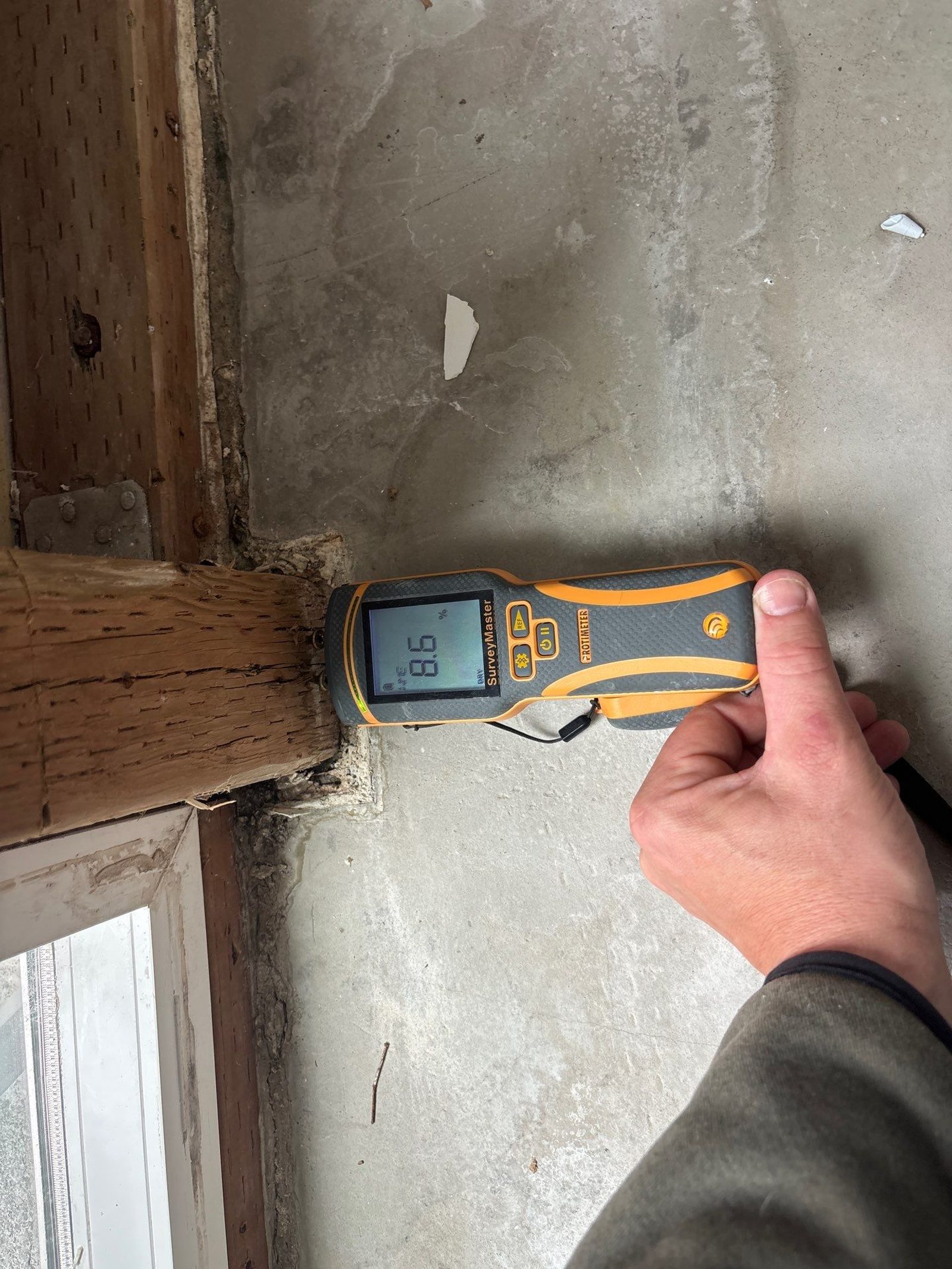
Overview
Water travels. What shows on the ceiling is rarely the full extent of what got wet. Using thermal imaging, moisture meters, and other diagnostic devices, we perform a survey of the home and look for indications of water damage in walls, flooring, framing, insulation, attics, and crawl spaces.
With a background in water damage restoration and accreditation through the IICRC, we determine the source or cause of the damage and consult on how it should be remediated to S500 standards. Because we do not perform the mitigation, our assessment is written for the structure — not for a scope of work we happen to sell.
Infrared scanning locates temperature anomalies that indicate moisture migration behind finished surfaces.
Penetrating and nonpenetrating readings confirm what thermal imaging suggests, with documented values.
Drying without finding the source guarantees a repeat. We identify what caused the intrusion.
Recommendations are grounded in the S500 standard of care for professional water damage restoration.
Know The Signs
A failed supply line can release hundreds of gallons before anyone notices, soaking drywall, subfloor, insulation, and framing. A survey establishes how far the water actually traveled so the drying plan covers the real affected area rather than the visible stain.
If the drying scope looks larger or smaller than the damage, an independent moisture survey gives you a documented second opinion before demolition begins or before equipment comes out too early.
Closing a wall assembly that has not reached dry standard traps moisture and creates a mold problem months later. Verification readings confirm the structure actually dried.
A stain that keeps returning after paint means the source was never corrected. Thermal imaging and moisture mapping trace the intrusion back to its origin — roof, flashing, plumbing, or grade.
Ground moisture, failed vapor barrier, poor drainage, and plumbing leaks all show up in the crawl space first, then move upward into the living space as humidity and odor.
Documented moisture readings, thermal images, and a written cause and origin assessment give you objective evidence rather than competing opinions.
Our Process
Our survey begins with the history of the loss and a walkthrough of the affected areas. We scan wall, ceiling, and floor assemblies with thermal imaging to identify anomalies, then verify every suspect area with penetrating and nonpenetrating moisture meters and record the readings against dry standard reference values.
We inspect the attic and crawl space, evaluate the likely source, and document what materials are affected and to what depth. You receive a written assessment describing the extent of moisture intrusion, the probable cause, and how the structure should be dried and restored under IICRC S500 — including a mitigation protocol when one is warranted.
Specific Work Practices Include
Flagship Environmental is built on hands on experience in the restoration industry. That background is why our reports read like something a contractor can execute rather than a list of numbers — we know what happens on the job site after the testing is done.
From the first walkthrough to the final written protocol, we document conditions accurately, send samples to accredited laboratories, and give you a clear plan to bring the structure back to a clean, safe, preloss condition.
What People Search For
A water damage consultant in Snohomish County earns their fee in the first hour. Our water damage inspection in Seattle combines moisture mapping and thermal imaging with hidden water leak detection so the wet drywall moisture reading — not a guess — defines the affected area. Where sanitary risk exists we complete a category 3 water loss assessment, and a flooded crawl space inspection is included whenever the water traveled down.
From there you get a written water damage scope of work built on the IICRC S500 standard of care, third party drying verification with documented drying equipment verification, and insurance claim water damage help that stands up in adjuster conversations. As an independent restoration consultant we also perform restoration invoice review, so a water intrusion investigation protects your building and your money.
Common Questions
Don't see your question here? Call and ask — we'd rather talk it through than have you guess.
More Services
Flagship Environmental utilizes the latest testing and sampling techniques in the process of inspecting your home for mold spores. Testing includes baseline sampling and multiple indoor sampling, crawl space and attic inspections, source assessment and more.
Flagship Environmental is certified to safely obtain samples of lead and asbestos and provide the lab results to indicate if these materials are found in your home.
With a background in water damage restoration and accredited by the IICRC, we procure a mitigation protocol and report your contractor can follow to bring your structure back to a clean and dry standard following S500 protocols.